























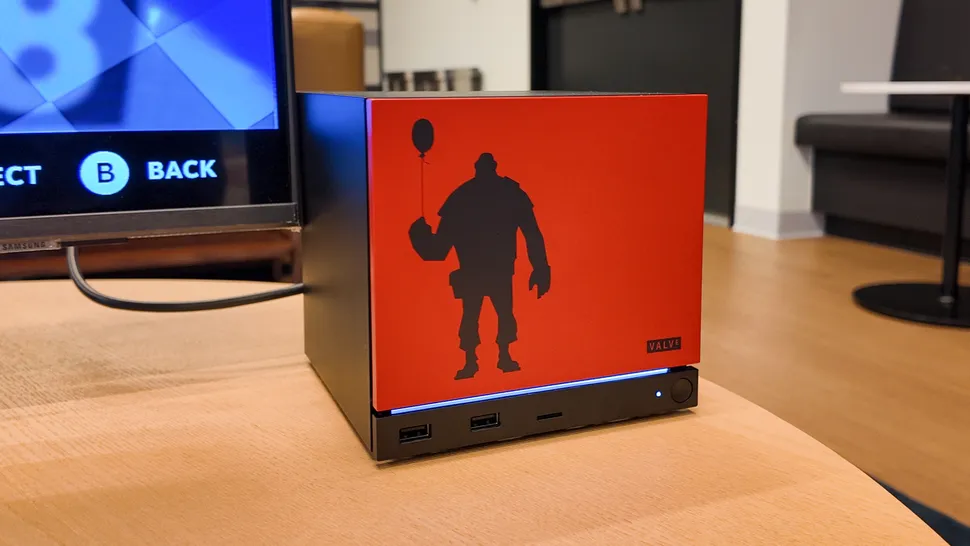
Valve through one of its main programmers, Pierre-Loup Griffais, finally gave a clearer picture of the price of Steam Machine. Quoted from PC Gamer, While the device does look like a neat little console for the living room, it's still philosophically positioned as a PC. That means the price expectation also needs to be adjusted: not a super-cheap console, but a midrange PC in a more compact and practical form.
Read also: Valve Announces Three New Steam Hardware for 2026
Benchmark Price: Racked PC Level, Not Console
In the podcast Friends Per Second, Griffais explained that the target price of Steam Machine will refer to the cost of building a PC with an equivalent level of performance. If you take components one by one, build a PC with similar performance, that's the cost range Valve wants to pursue. Pricing is still a work in progress as component market conditions are constantly changing, but the main direction is pretty clear.
You don't have to expect a console-style business model that is often sold at relatively low prices because it is subsidized by the software ecosystem. Griffais explicitly said Steam Machine will not be subsidized like consoles. Modern consoles usually play in the range of around 450-600 US dollars, while Steam Machine is closer to the price pattern of prebuilt PCs or assembled PCs of the same performance class.
PC Gamer itself has previously tried to guess the price range and the average prediction is around 525 US dollars. This figure is slightly below the price of one of the big consoles with a disc drive and only tens of dollars away from the predicted price of the next generation Nintendo Switch. But it's all speculation until Valve announces an official price.
Steam Machine Advantages: Tiny Form Factor and Sofa Experience
Although the price point is close to that of a fully assembled PC, Valve is trying to add value on the other side. Griffais mentioned several aspects that are difficult to achieve if you build your own PC from scratch, especially when the target is the living room.
The Steam Machine is designed with a small form factor, easily tucked into a TV shelf, has a low noise level, and is integrated with a console-style way of using. You can sit on the couch, press a button on the controller, and the device turns on and prepares the gaming environment to the TV screen without much additional configuration.
Such an experience is actually possible with a regular PC, but requires a more complicated combination of hardware, software configuration, room layout, and accessories. Valve is trying to package the whole experience into one device that is more plug and play. Griffais even mentioned that there is no product in the PC market that fully offers the living room experience package that they are pursuing for Steam Machine.

Steam Machine's Position Between PC and Console
Steam Machine is placed in a unique position: PC-style midrange performance, but console-like packaging and comfort of use. From the point of view of gamers who like to build, this value may feel less attractive if it is only seen from the raw price-to-performance ratio. Currently, the estimated price of a build with an RTX 5060-class graphics card can be in the range of 750-800 US dollars, so Valve's room for maneuver is not too wide. Pricing too high risks the Steam Machine concept fading back into the background like previous attempts.
For gamers who don't want to bother with builds, cables, small case setups, airflow, etc., the Steam Machine could be more appealing. The main focus is not just frame rate numbers, but a combination of stability, convenience, and integration with the Steam ecosystem in the living room. Valve's track record with Steam Deck also adds to the expectation that their definition of a “good deal” goes beyond the typical prebuilt price.
Those of you familiar with the Steam Deck may have gotten a taste of how Valve balances specs, price, and experience. Steam Machine seems to be trying to bring a similar philosophy to a mini desktop format that's more suited to being a gaming center in the living room.
Pricing Challenges and Gamer Expectations
The biggest challenge for Steam Machine comes from the community's own expectations. Many PC gamers view hardware products like this through the lens of “how much FPS at this price” and then compare it directly to a PC build. Griffais emphasized that the team is still refining the pricing details, but also realized that now is not the easiest time to guess the cost of components.
Steam Machine needs to find a middle ground: Affordable enough that it's still rational compared to midrange PC builds, but still have a margin that allows Valve to develop and support the product in the long term without a console-style subsidy scheme. If Valve is too aggressive in raising the price, the risk of the concept failing in the long run is considerable. If it's too low, the device could be difficult to sustain as a business.
For now, Valve's position is quite open: price follows PC performance class, value claims lie in living room comfort, low noise, and Steam ecosystem integration. Final specification details and official pricing will be the deciding factor on whether the Steam Machine is able to attract the attention of PC gamers who have had their fill of both standalone and prebuilt options from various vendors.