














With the release of the live adaptation of the second season of the HBO series The Last of Us (and continuing into the third season), there has been much debate about the quality of the series after being adapted to the same core story.
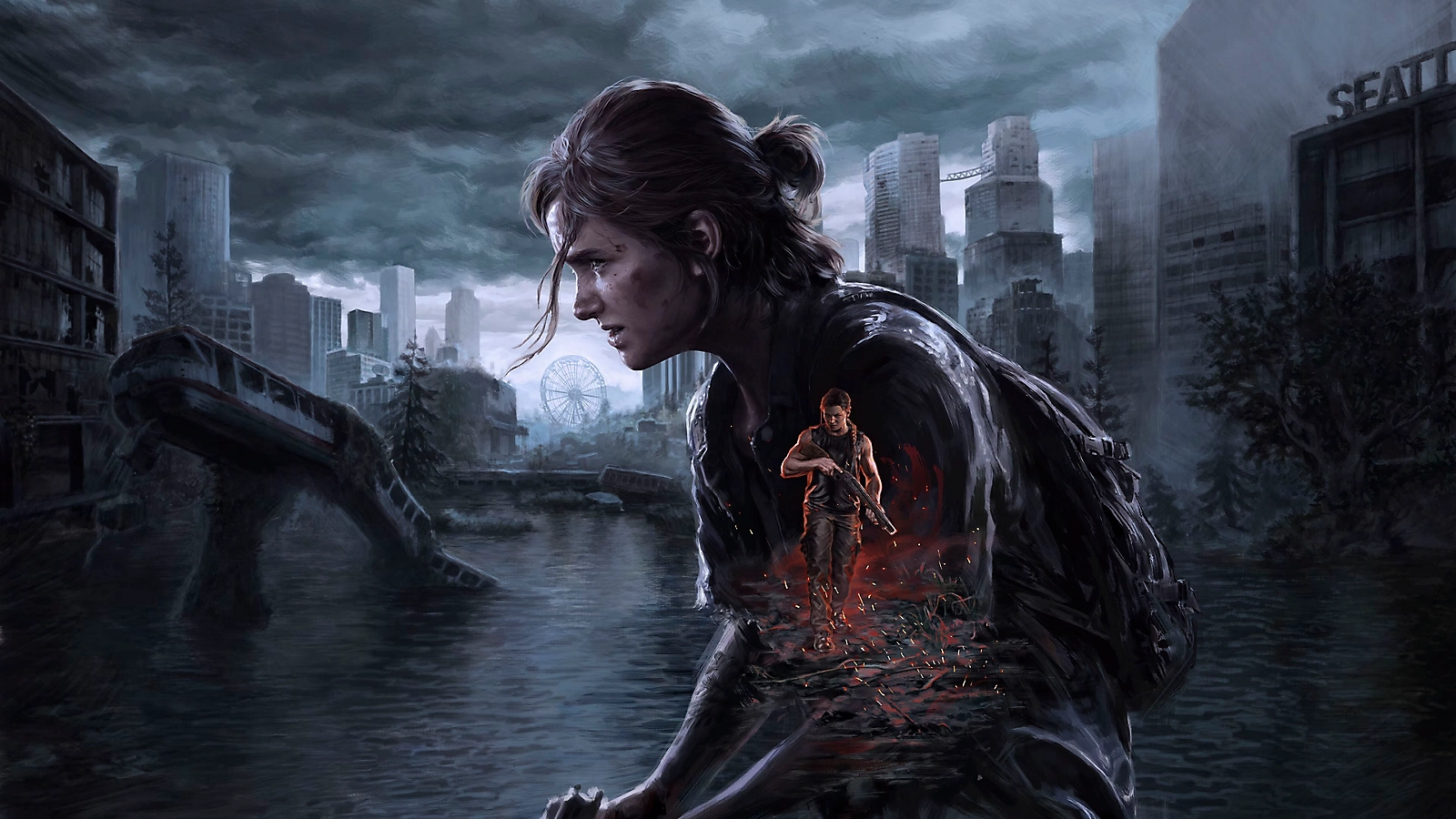
But first, we should set our sights on the game it's based on: The Last of Us Part II Remastered which arrives on PC. This review will focus more on the second game or Part II, but there will be some references to Part I which is the beginning of the long Last of Us series.
Shocking yet Intriguing Story Narrative
It's actually quite difficult to describe how highly thought out each character's storyline is to make it unique. Admittedly, one of the strengths of this game is the narrative.
Without giving away spoilers, the story of The Last of Us is generally based on the main characters Joel and Ellie crossing various regions and some sort of zombies caused by cordyceps that spread either through bites or spores. What is done well is how Naughty Dog develops each character to intertwine with each other.

Throughout the storyline, players will see Ellie and the surrounding characters heading towards an objective (which is the main premise of each objective), but there are various cutscenes that provide context and build slowly. Eventually, what started out as a story about fighting infected becomes a larger scale battle. People? Opposition? Ideas? Players can see that in the midst of such a difficult situation, the true nature of these characters will slowly emerge.

Specifically in the second part of the series, players will see two different viewpoints of the two main characters, which actually if you think about it, they are antagonistic roles for each other. This is what makes The Last of Us Part IIThe second part, in particular, gained a lot of appreciation for the story they built.
Simple but Satisfying Gameplay
It can be said that there are no mind-blowing weapons or mechanics in the navigation of this game. However, this is not a drawback, but rather an aspect that makes the player's focus well-directed.

In both parts one and two, the main character can use a variety of ranged, melee and explosive weapons. Players can upgrade these weapons, but the changes are not so significant that they alter the gameplay.
Broadly speaking, it is not advisable to always be desperate to face enemies openly, as resources are usually quite limited, and even if they are, they are located in areas where there are certainly many enemies. Resource management becomes very important.

In general, players can only prepare their resources to the maximum, or place bombs at certain points. Enemies will appear only when the player enters a certain place, so quick response is required (similar to a dungeon).
It's a bit unfortunate because of this limitation, but it's understandable. It's an approach that provides a surprise effect, thus supporting the general narrative of the themed game. post-apocalyptic This. But this isn't really a problem, especially on normal difficulty which seems to be the choice of the majority of gamers in general.
Excellent World-Building
For AAA-caliber games like The Last of Us, graphics and worlds that are pleasing to the eye seem to be a must. Of course, with engine standards and competition between other games being quite intense, players must have high expectations. It's a little difficult to describe the match between the world of The Last of Us and the graphics, because the good points are not only in the detailed environments and snowflakes, but in how supportive every object and building curve is so that we as players always feel on the edge.

For example, it's not uncommon for Ellie to pass by old buildings that are no longer in use, so (we know) there will be times when falling items or broken buildings can happen at any time. When they do happen, the clever use of small, cramped spaces combined with a treasure or escape route at the end, is an attraction in itself.
We need to give kudos to the fact that every time you enter a new building, the player is given a feeling of hesitation, and there is no other way but to walk in.

In the end, The Last of Us Part II Remastered aptly depicts the post-apocalyptic world in a well-thought-out manner.
Pacing Story is Quite Controversial
Unfortunately, the main narrative development that is the strong point of Last of Us Part II still has a trade off. Without giving away any obvious spoilers, there is a story decision at the beginning of the game as an inciting incident that becomes the turning point of the story, which is quite controversial.
This gives the impression that what was done in Part I was "wasted". Of course, as the story progresses, players will begin to understand why this is happening. But it would have been better if there were some scenes or initial time that players spent to continue for 1-2 hours about the relationship between these two characters.
Conclusion

The Last of Us Part II (PC) is a game that executes its narrative and world almost perfectly, keeping players curious about what's next and motivated to move forward. Simple mechanics keep the player focused on the narrative.
Pros
- Narrative story that draws the curiosity of further exploration
- Simple but focused mechanics
- World-building that supports gameplay
Disadvantages
- Controversial pacing of the initial story may leave some players disappointed
The Last of Us Part II (PC)
Summary
The Last of Us Part II is a game post-apocalyptic that executes the narrative zombies with near perfection and backed by a comprehensive world.