












Two Point Museum: Rides & Relics is the fourth paid DLC for Two Point Museum. Following Fantasy Finds, Zooseum, and Arty-Facts, this expansion introduces a theme that’s the furthest removed from the typical museum concept: an amusement park.
Arty-Facts adds a new production line for artworks within the museum. Rides & Relics takes a different approach by adding a new management layer on top of the existing loop. In addition to organizing exhibits and managing visitors, you’ll also build rides, design roller coasters, and oversee their maintenance.
As a result, this DLC feels like two management genres combined in a single setting. The museum’s core remains, but the gameplay shifts toward amusement park management.
Also Read: Review of Two Point Museum: Arty-Facts DLC
The Concept and Location of the Two Point Museum: Rides & Relics
The main setting of this DLC is Riquetti Gardens, a legendary amusement park in Two Point County that has long been abandoned. The rides are rusty, and it hasn’t seen any visitors in a long time. Your task is to restore this place as a combination of a museum and an amusement park.
To carry out these tasks, you’ll be assisted by Funfair Experts, a new type of expert who specializes in ride-related matters. They’re key to your progress because almost all new content is tied to their work.
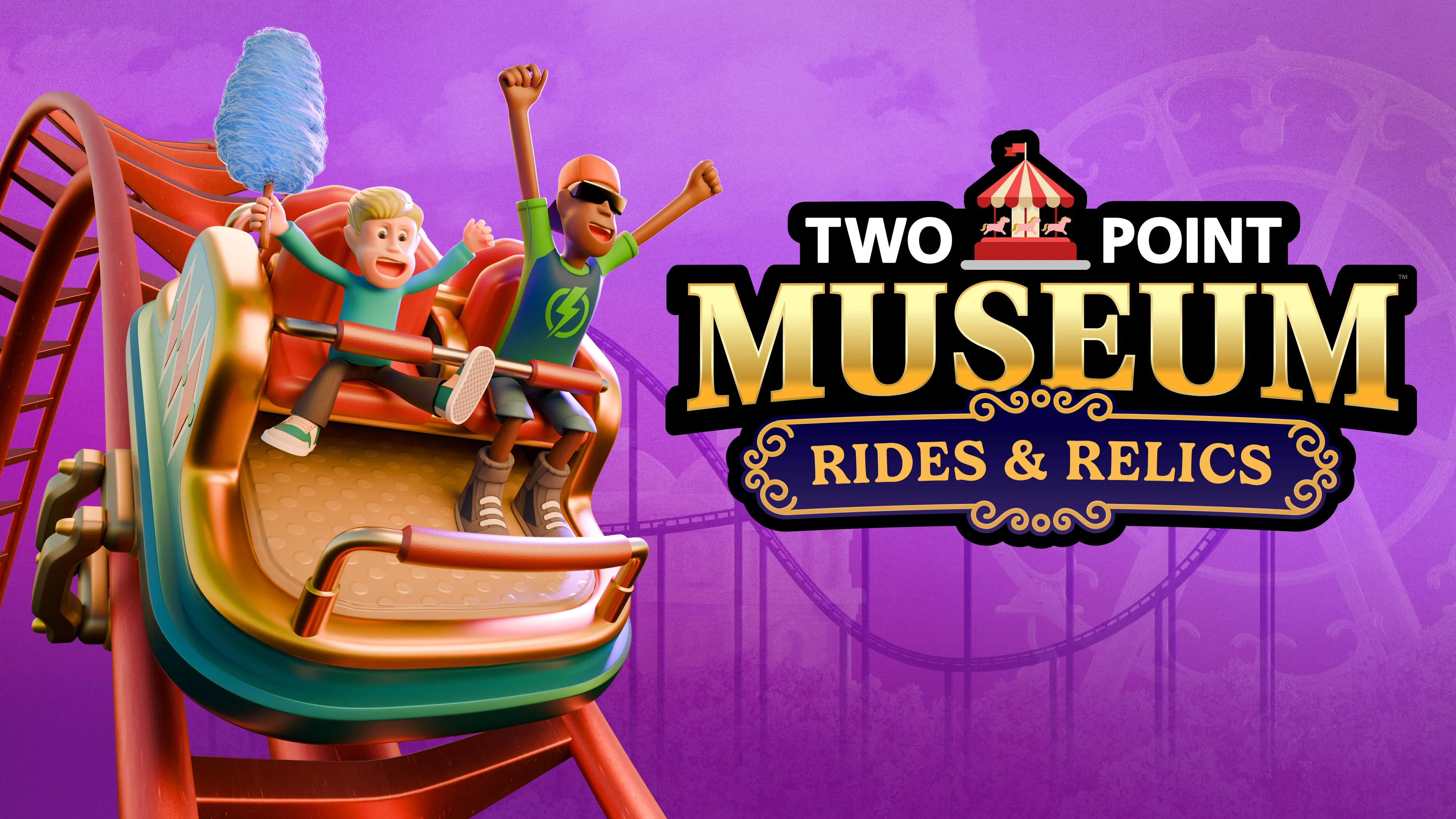
It is this focus on rides that sets “Rides & Relics” apart from previous DLCs. “Fantasy Finds,” “Zooseum,” and “Arty-Facts” continue to focus on museum collections. Meanwhile, “Rides & Relics” incorporates rides that visitors can ride right inside the museum.
This discrepancy raises the question: why an amusement park? This DLC does feature old rides from Two Point County’s past. However, when you play it, the rides don’t really feel historic.
The connection to the museum is more mechanical in nature. You still send experts on expeditions, obtain blueprints, and then build rides based on those blueprints. Because of this, Riquetti Gardens feels more like an amusement park than a museum.
This approach may be received differently by each player. For some players, this combination feels quirky and characteristic of the Two Point series, which often features unique—even slightly odd—ideas. For others, the connection between a museum and an amusement park may feel forced.
Gameplay: Two Point Museum: Rides & Relics
Just like in the base game, expeditions remain the main source of progress. Funfair Experts are sent to Gearbox Fairgrounds, an old, abandoned amusement park. From there, they bring back blueprints for new rides and perks that can be attached to the rides.

Blueprints not only unlock new rides, but are also used to improve the quality of existing rides. Higher-quality rides have better ratings and more perk slots.
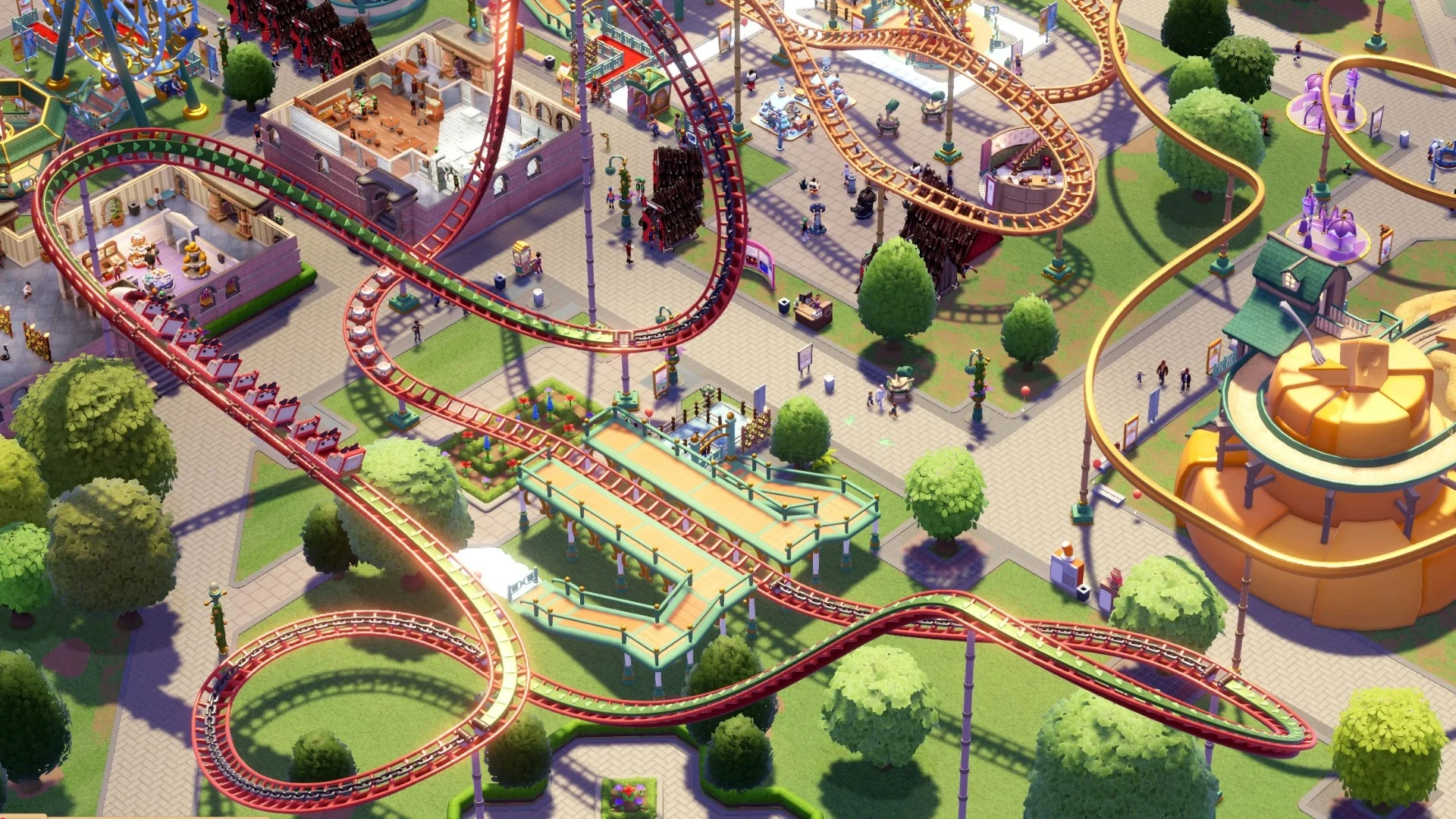
Of all the rides, the most notable feature is the roller coaster that you can design yourself. You can adjust the track height, slope, camber, and curves to create different tracks. There are also five Coaster Themes to change the roller coaster’s appearance.
The roller coasters here are mini roller coasters, so the game isn’t as flexible as those that focus specifically on amusement park management. This approach still makes sense, since the rides have to share space with exhibits and other museum facilities.
Although they’re small in scale, you can incorporate rides and roller coasters into the museum’s existing theme. This approach makes the museum more appealing and gives it a stronger identity.

Each ride also has three new stats: Thrill, Ferocity, and Nausea. Thrill keeps visitors at the museum longer. Meanwhile, Nausea can be reduced by equipping perks obtained from expeditions.
The way attractions generate revenue also differs from that of regular exhibits. Attractions do not rely on donations; instead, they use ticket prices that you can set for each attraction.
Just like the exhibits in the base game, rides also require maintenance. The difference is that rides must be shut down first if you want to perform a full service. This means that maintenance schedules need to be planned more carefully.
When the rides are busy, the lines of visitors also get longer. To entertain them, museum assistants can be transformed into mascots who roam the amusement park grounds.
In addition to the rides, this DLC also adds more than 15 Funfair Exhibits. This collection includes Antique Amusements and interactive displays.
Management Rhythms and Challenges
The first challenge arose right at the start of the campaign. Riquetti Gardens already contained a broken roller coaster that took up quite a bit of space. This roller coaster is part of the tutorial, since you’ll eventually be instructed to ask the Funfair Expert to clean it up.
The problem is, before you reach that tutorial stage, you can’t clean, remove, or even click on this roller coaster. This can be quite annoying when you start arranging the area.
The next challenge arises when you start building your own roller coaster. The roller coaster editor offers creative freedom not found in previous DLCs, but the process of creating tracks still relies on trial and error.

The Thrill, Ferocity, and Nausea scores are indeed visible. However, there’s no clear indication of whether a track must be steep, long, or have a specific combination of features to earn a good buzz rating.
As the museum grows, the number of things you need to keep track of also increases. You’ll still be managing the layout, staff, and visitor needs, plus roller coaster designs and ride maintenance schedules. Players who prefer a more laid-back pace might find this DLC more hectic than a typical museum loop.
As a result, much like Arty-Facts, the value of Rides & Relics is more apparent to players who are already familiar with the basics of Two Point Museum. The new system isn’t hard to grasp, but the number of decisions you have to make increases right from the start of the campaign.
Expedition Progress That Feels Like a Grind
The blueprint system, which is central to progress, also comes with its own set of issues. To improve the quality of your vehicles, you need to send out expeditions repeatedly. The results don’t necessarily yield the blueprint for the next upgrade right away, so the progression can feel like a lot of grinding.
Perks have a similar issue. Once a destination is revealed, you can see the perks available there. However, if there are two perks at a single destination, you don’t know which one you’ll get, so the process feels like a gacha.
Ride Ribbon and Inspection Notifications
Throughout this lengthy process, Ride Ribbon serves as a helpful guide. Ride Ribbon is an award from the Department of Amusement given to rides that meet certain criteria. Since each ride displays the ribbon it can earn, you can customize your rides to meet those criteria.
The problem arises as the number of rides and roller coasters continues to grow. Inspections are conducted repeatedly, and each result appears as a separate notification. If the requirements haven’t been met, that notification feels like receiving a rejection email.
Over time, these notifications start to feel like spam. It would be more practical if the inspection results were displayed in a single summary—for example, a list showing which rides received a ribbon and which ones still don’t meet the requirements.
New Decor and Kudosh Supplies
In addition to the rides, Rides & Relics also adds a ton of new decorations. Riquetti Gardens is the largest map in Two Point Museum so far, so there’s plenty of space to arrange decorations.
Unfortunately, the decorations earned through the campaign still need to be unlocked with Kudosh before they can be used. Kudosh is different from museum currency, which can be obtained easily. As a result, the desire to fill the large area with various decorations is held back.
Safety in Open-Air Amusement Parks
The vast, open area also changes how you maintain security at the museum. In the base game and previous DLCs, all activities took place inside the building. Blind spots and critical areas could be monitored by installing CCTV cameras.
Entry and exit points are also easier to control because most visitors pass through the gates. Usually, only thieves with certain traits look for alternative routes. The situation is different at Riquetti Gardens because the amusement park there is very open.
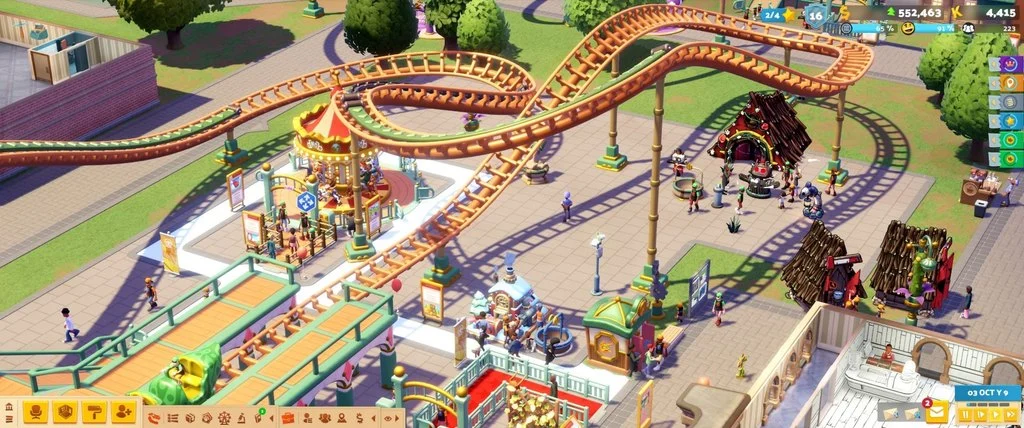
Wahana does not generate donations because its revenue comes from ticket sales. However, there are still installations that generate donations, such as interactive installations. The placement of these installations must be carefully considered so that the CCTV cameras monitoring them remain within the security team’s line of sight.
One solution is to install additional CCTV cameras at several locations. As a result, you’ll also need more security staff with the appropriate skills. As is often the case with game management, every solution brings new considerations.
Now Available on PC, PlayStation 5, and Xbox Series X|S
Two Point Museum: Rides & Relics has been available since October 8, 2026, for PC via Steam and the Epic Games Store, PlayStation 5, and Xbox Series X|S. To play it, you’ll need to own the base game, Two Point Museum. You can find complete information about this DLC at Two Point Store.
Rides & Relics is the Two Point Museum DLC with the boldest concept yet. Custom roller coasters, the Ride Ribbon, and an open layout offer new challenges. On the other hand, track design still relies on trial and error, and the expedition progression feels like a grind. If you’ve already enjoyed Two Point Museum and are looking for something truly different, this DLC is worth considering.